Reverb isn't just about placing a sound in a room; it’s a powerful sculpting tool that defines space, depth, and the very evolution of a tone. For producers and sound designers chasing atmospheric soundscapes, cinematic washes, or deeply textured pads, the quest for the Top Slow Reverb Plugins and Software is paramount. These aren't your typical utilitarian room reverbs. We're talking about tools designed to create lush, lengthy decays that swell, shimmer, and morph, turning a simple synth chord into a breathtaking journey.
A truly effective reverb transforms a sound, subtly or dramatically, without washing out your mix. When chosen and shaped correctly, it weaves into the fabric of your production, adding an imperceptible yet crucial layer of magic. But poorly applied, it can quickly muddy the waters, leaving your music sounding distant and crowded. This guide delves into the best reverb plugins and software, both paid and free, meticulously chosen for their sound quality, control, and ability to craft truly evolving sonic spaces.
At a Glance: Your Slow Reverb Essentials
- Beyond Basic Space: Slow reverbs are for atmosphere, textures, and evolving soundscapes, not just spatial placement.
- Key Controls: Look for robust pre-delay, decay, damping, and modulation options to sculpt long tails.
- Algorithmic Power: Modern algorithmic reverbs often offer the most flexibility for shaping evolving sounds.
- Character is King: Vintage-inspired and creative reverbs excel at adding unique sonic signatures to slow decays.
- Workflow Matters: Intuitive interfaces mean faster experimentation and less friction in your creative flow.
- Free Gems Exist: Don't underestimate free plugins; some offer professional-grade slow reverb capabilities.
Why "Slow" Reverb is a Game-Changer
When we talk about "slow reverb," we're focusing on its capacity for extended decay times, often coupled with modulation, shimmer, or unique algorithms that allow the reverb tail to evolve and breathe. This isn't just about making something sound big; it's about making it feel alive, creating sustain that develops over time, and pushing the boundaries of traditional spatial effects into the realm of sound design.
Think of those epic synth pads that hang in the air for what feels like an eternity, subtly changing in texture. Or a guitar chord that dissolves into a shimmering, ethereal mist. This is the domain of slow reverb. It’s a crucial element in ambient, cinematic, electronic, and even avant-garde productions, where the reverb is often as important as the dry signal itself.
Deciphering the Reverb Landscape: A Quick Primer
Before we dive into specific plugins, let's quickly demystify the core types of reverb. Understanding these foundational categories will help you choose the right tool for your slow, evolving sound design needs.
- Room Reverbs: These emulate the acoustics of a studio or small performance room. While typically used for subtle spatial glue, a well-controlled room reverb can provide a natural base for slower, evolving sounds.
- Hall Reverbs: Grand and expansive, halls are perfect for big, smooth, and spacious sounds. They naturally push elements further back, making them ideal for long, cinematic washes and evolving textures.
- Chamber Reverbs: Originally small, reflective side-rooms, digital chamber reverbs often produce a denser, thicker sound with numerous artificial reflections. They can be great for creating a rich, evolving sonic "cloud."
- Plate Reverbs: Known for their bright, smooth, and often forward-sounding tones, plates are created by vibrating a metallic plate. While typically used to bring elements forward, their inherent brightness and smooth decay can be sculpted for shimmering, slow effects.
- Spring Reverbs: Functioning by vibrating a spring, these produce a distinct, somewhat metallic sound, like many closely spaced echoes. A staple for guitars, they offer a unique character that can be creatively twisted for evolving textures, though less naturally "smooth" than halls or plates.
- Algorithmic Reverbs: Digitally produced using complex algorithms, these are the chameleons of the reverb world. They can emulate physical spaces or create entirely unnatural, fantastical environments, offering immense flexibility for shaping long, evolving tails with modulation, shimmer, and unique decay characteristics. This is often where you'll find the most powerful tools for slow reverb.
- Convolution Reverbs: These use recorded samples (impulse responses or IRs) of real spaces to recreate highly realistic reverberations. While excellent for realism, they can sometimes feel static. For truly evolving slow reverbs, algorithmic often offers more dynamic control.
Crafting Your Sound: Key Principles for Choosing Reverb
Selecting the right reverb, especially for slow, evolving textures, goes beyond just picking a cool-sounding plugin. Here’s what to consider:
- Purpose: Are you trying to place a sound in a vast, imaginary space? Add a shimmering, evolving tail for a pad? Or create rhythmic, modulated ambience? Your goal dictates the type of reverb you need. For slow reverb, you're usually aiming for character or atmospheric effects rather than simple realism.
- Control is Crucial: Longer decay times demand more control. Look for features like damping (to tame high-end harshness), detailed EQ (to manage low-end buildup), and frequency-dependent decay (to sculpt how different frequencies die out). These are vital for keeping slow reverbs from becoming muddy.
- Workflow & Speed: Experimentation is key with slow reverbs. An intuitive interface with clear controls and useful visual feedback allows for quick adjustments, letting you stay in your creative flow rather than getting bogged down in menus.
- Movement & Modulation: This is where slow reverbs truly come alive. Modulation options (like chorus or pitch shifting within the reverb tail) and automation capabilities are essential for creating evolving textures, shimmering pads, and dynamic sound design elements. While stable reverbs are often preferred for vocals, movement is your friend here.
- Value: Don't let price dictate your choice entirely. There are fantastic free reverbs that can achieve professional creative effects. Paid plugins often offer deeper control, more robust workflow features, and predictable, high-quality results under pressure.
Our Top Picks: Slow Reverb Plugins & Software for Evolving Tones
Now, let's dive into the plugins that truly shine when it comes to crafting those extended, evolving, and atmospheric reverb sounds. We've categorized them to help you find your perfect match.
Workhorses That Can Stretch: Transparent & Control-Rich
These plugins are renowned for their clarity and detailed control, making them excellent starting points for sculpting nuanced, slower reverbs without sacrificing mix integrity.
- FabFilter Pro-R 2 (Algorithmic, Paid): This is the benchmark for control and realism. Its unique Decay Rate EQ allows you to sculpt frequency-specific decay times, meaning you can have highs linger while lows dissipate quickly, or vice-versa. This level of detail makes it incredibly powerful for shaping long, smooth, and evolving tails without muddiness. Its clean, modern sound and fast interface make complex adjustments feel intuitive.
- FlexVerb (Solid State Logic) (Algorithmic, Paid): While a general workhorse for rooms, halls, plates, and chambers, FlexVerb’s early/late reflection control, built-in EQ, and sidechain options make it possible to push its tails into longer, more controlled territories. It’s adept at keeping big reverbs from overwhelming the dry signal, crucial for evolving textures.
- smart:reverb 2 (sonible) (Algorithmic, Paid): This intelligent reverb analyzes your source audio and adapts its reverb to fit, resulting in less clashing and quicker placement. For slow reverbs, this means maintaining the intelligibility of your source while the tail evolves gracefully around it, making it an excellent choice for dynamic ambient textures.
- Verbsuite Classics (Liquidsonics) (Convolution, Paid): Emulating numerous classic digital reverb units, Verbsuite uses advanced technology to capture their dynamic character beyond static impulse responses. For slow reverbs, this means the tails feel more alive and evolving, rather than simply fading out. It's incredibly versatile for full mixes but shines on individual elements like drums and synths when you want a rich, classic, evolving space.
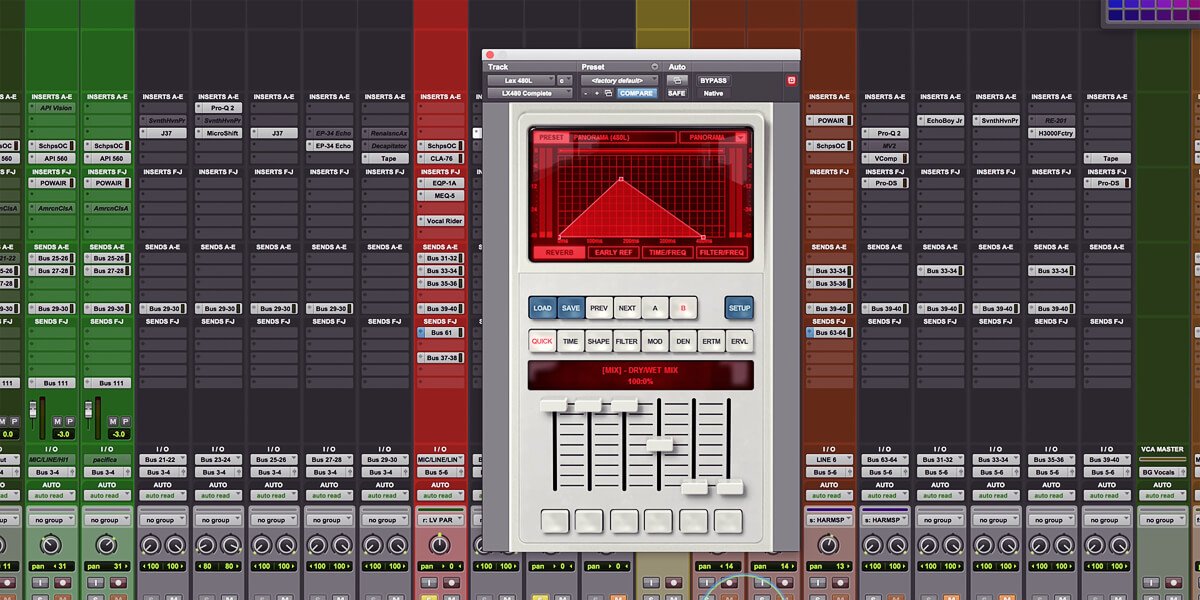
- Lexicon PCM Native Reverb (Algorithmic, Paid): A legendary name in reverb, Lexicon offers classic quality with seven different modes and extensive customization. Its algorithms are known for their rich, deep, and smooth tails, which can be stretched to create truly luxurious and evolving spaces. It can even be run with flexible stereo/mono combinations for tighter imaging.
- ChromaVerb (Logic Pro X) (Algorithmic, Included): Don't overlook this stock Logic plugin. With a clean interface and visual feedback, ChromaVerb offers various modes and serious tone-shaping via frequency nodes. Its ability to stretch and modulate decays makes it surprisingly capable for creating beautiful, evolving ambient spaces without needing a third-party purchase.
- Stock Reverbs: Remember that even basic stock reverbs (Logic's Space Designer, Ableton's Reverb, etc.) can produce great results with intentional parameter tweaking, especially with aggressive pre-delay, EQ, and modulation. They're a fantastic way to learn the ropes before investing.
Character & Vintage: Adding Soul to Your Slow Reverb
These plugins are less about transparent realism and more about injecting a distinct sonic personality into your reverbs. Their unique flavors are perfect for creating slow, atmospheric sounds with a nostalgic or artistic edge.
- Lexicon 224 (UAD/Plugin Alliance) (Algorithmic, Paid): The original Lexicon 224 is legendary for its smooth tails, slightly grainy texture, and musical depth. Its digital character, reminiscent of classic studio spaces, lends itself beautifully to long, dreamy pads, ethereal vocals, and ambient guitars, providing a rich, evolving texture that evokes a vintage feel.
- Valhalla VintageVerb (Algorithmic, Paid): At a remarkably affordable price, VintageVerb delivers a wealth of classic digital reverb sounds. With different "color" modes (1970s, 1980s, NOW) and algorithms, you can dial in anything from clean modern sounds to darker, older textures. It excels at huge, lush, 80s-esque tails that shimmer and evolve, making it a go-to for vocals, leads, and drums that need to float in a vibrant, musical space.
- Lustrous Plate (Slate Digital) (Plate, Paid): For a thick, lush, and bright plate reverb with unique modes, Lustrous Plate is a standout. Plates naturally sit "forward" in a mix, but their long, smooth decays can be shaped for gorgeous, shimmering ambience, particularly on vocals, lead instruments, and snares that need to feel expansive and present.
- UA EMT 140 Plate (Plate, Paid): A revered emulation of the classic EMT 140, this plugin offers smooth, pretty, and forward-sounding plate reverb. With three distinct plate models, it’s perfect for pushing naturally recorded elements into a beautiful, evolving sonic space that feels organic and rich.
- Little Plate (Soundtoys) (Plate, Paid): This character-driven plate reverb from Soundtoys is superb for subtle tonal enhancements and creating unique ambiences. Its "mod" switch adds extra movement and character to the tail, and the "infinite decay" mode is explicitly designed for creating vast, evolving drones and textures, cementing its place as a top slow reverb plugin.
- Springs (Eventide/AudioThing) (Spring, Paid): Spring reverbs, with their uneven and slightly unpredictable decay, offer a distinct flavor. Plugins like Eventide's Springs or AudioThing's Springs model various units, capturing that unique, resonant character. While often a "flavor tool" for guitars and keys, these can be manipulated to create fascinating, evolving, and slightly chaotic textures for retro-inspired productions.
- THU (Overloud) (Spring/Room, Paid): As part of a larger multi-effects suite, THU includes models of rack spring and room units that sound fantastic on guitars and synths. Their inherent grit and character can be harnessed for longer, evolving decays that maintain a unique edge.
Creative & Atmospheric: Where Slow Reverb Truly Shines
This category is built for the sound designer and ambient musician, offering tools that prioritize scale, movement, and otherworldly atmospheres. These are the plugins that will truly unlock the potential of slow reverb in your productions.
- Blackhole Immersive (Eventide) (Algorithmic, Paid): This plugin is not subtle. Blackhole is all about scale, movement, and creating immense, often unnatural, atmospheres. With immersive format support and incredible stereo width, it's a dream for cinematic music, ambient production, and sound design. Its ability to create endlessly evolving, swirling textures makes it a quintessential slow reverb tool.
- Crystalline (Baby Audio) (Algorithmic, Paid): Pitched as a "next-generation algorithmic reverb," Crystalline offers incredible depth and width for modern, clean sounds. Its shimmer engine and tempo-sync options make it ideal for crafting evolving, rhythmic, and vibrant reverb tails perfect for pop, electronic, and ambient music.
- Spaced Out (Baby Audio) (Multi-Effect, Paid): More than just a reverb, Spaced Out combines delay, modulation, and reverb into a creative playground. Its built-in sequencer and XY control pad are specifically designed for movement-based effects, evolving textures, and rhythmic ambience. If you want your reverb to tell a story and evolve over time, this is an excellent choice.
- Aurora (iZotope) (Algorithmic, Paid): Aurora dynamically reacts to your audio, intelligently carving out space in the mix to prevent clutter. This dynamic nature means that as your sound evolves, Aurora intelligently adjusts, allowing vocals and instruments to shine through even amidst long, lush, evolving tails.
- Motion: Dimension (Newfangled Audio) (Multi-Effect, Paid): Blending reverb and modulation within an inspiring hexagon interface, Motion: Dimension encourages experimentation. It's fantastic for creating pads, textures, and evolving sounds that demand width and constant motion, pushing the boundaries of what a traditional reverb can do.
- Raum (Native Instruments) (Algorithmic, Paid): Raum offers three versatile modes for creating unique, often unnatural effects. Its BPM sync for pre-delay and a "freeze" option for infinite ambiences make it a powerful tool for synths, percussion, and electric guitars when you want to craft evolving, sustained textures.
- Valhalla Super Massive (Algorithmic, FREE): This is perhaps the most incredible free plugin for massive, evolving spaces. Combining reverb and delay algorithms, Super Massive is capable of sounds rivalling paid plugins, particularly for ambient music, sound design, and experimental effects. If you're looking for a top slow reverb plugin without spending a dime, start here.
- TAL-Reverb-4 (Algorithmic, FREE): A simple yet incredibly effective vintage plate-style reverb with built-in modulation for width and softness. Its minimal controls make it easy to dial in lush, warm, and evolving plate reverbs quickly, proving that free plugins can be absolute gems for specific character.
Mastering Slow Reverb: Practical Tips for a Polished Mix
A good reverb places sounds, adds depth without blur, and supports the mix without drawing attention to itself. When working with slow, evolving reverbs, these principles become even more critical.
- Pre-Delay is Your Friend: For clarity, especially with long tails, often less decay and more pre-delay is effective. Pre-delay allows the dry sound to hit before the reverb tail begins, maintaining punch and definition even as the reverb washes over it.
- Tame the Low End: To avoid muddying your mix, always high-pass your reverb send or the reverb plugin itself. Long low-frequency tails can quickly build up and create a boomy, undefined sound. Consider subtle mid-range cuts as well to maintain space for other instruments.
- Don't Be Afraid to Shorten Decay: While we're talking about "slow" reverbs, sometimes a slightly shorter, yet still atmospheric, decay combined with more pre-delay can be more effective than an infinitely long tail that obscures everything.
- Consistency is Key (Mostly): While you might use one main workhorse reverb for general spatial placement and a second, more creative one for specific effects, ensure there's a certain "feel" of consistency across your mix. Even with multiple reverbs, they should generally feel like they exist in the same sonic universe, through small adjustments rather than drastically different settings.
- Modulation and Automation: Embrace modulation within your reverb plugin and automate parameters like decay, pre-delay, or mix level. This is how you make slow reverbs truly evolve and become dynamic parts of your arrangement.
- Parallel Processing: Send your dry signal to an auxiliary track with your slow reverb, and then blend the wet signal back into the mix. This gives you maximum control over the wet/dry balance and allows you to process the reverb signal independently (e.g., with EQ, compression, or even sidechaining). To really make your slow reverbs impactful, consider exploring how a dedicated slow reverb generator can add unique textures and movement to your soundscapes.
Your Burning Questions About Reverb, Answered
Let's clear up some common queries about using reverb effectively, especially when aiming for those long, evolving sounds.
- How many reverbs do I actually need? You don't need many at all. Most sessions can be handled with one or two solid tools: a reliable "workhorse" for everyday space (often on a send) and a second option for character or creative, slow reverb moments. Many professional mixes use a single main reverb on sends, plus maybe a second for a contrasting texture on specific elements.
- Algorithmic vs. Convolution: Which is better for slow reverb? For truly evolving slow reverbs, algorithmic reverbs generally offer more flexibility and are easier to shape dynamically in a mix. They allow for intricate control over modulation, shimmer, and frequency-dependent decay. Convolution reverbs excel at realism but can sometimes feel static when stretched for very long tails. Modern productions often lean towards algorithmic for its control and creative workflow, especially for non-realistic spaces.
- How do I avoid muddy reverb, especially with long tails? This is critical. The main culprits are low-frequency buildup and insufficient pre-delay. Always high-pass your reverb (cut frequencies below 150-300 Hz depending on the source) and use pre-delay to create space between the dry sound and the reverb tail. Shortening the decay time, even slightly, can also help significantly.
- Can I use multiple reverbs in a mix? Yes, absolutely! But as mentioned above, strive for consistency in feel. You might use a short plate for a vocal, a long hall for a pad, and a spring for a guitar. The key is that these different reverbs should complement each other and feel like they could exist in the same artistic universe, rather than completely clashing.
- Are free reverb plugins any good for slow reverb? Absolutely! Plugins like Valhalla Supermassive and TAL-Reverb-4 are capable of professional results and can compete with many paid options, especially for creative and atmospheric effects. Paid plugins often offer workflow improvements, deeper control, and predictable results under pressure, but free options are a fantastic starting point for intentional sound design.
Your Journey into Evolving Soundscapes Begins Now
The world of slow reverb is a vast and inspiring one, offering endless possibilities for shaping atmosphere, building tension, and creating truly immersive listening experiences. Whether you're chasing the shimmering echoes of a vintage plate, the infinite expanse of a digital hall, or the otherworldly textures of a modulated algorithm, the tools are at your fingertips.
Don't be afraid to experiment. Start with a simple synth pad or an acoustic guitar, dial in a long pre-delay, stretch that decay, and then dive into the modulation and EQ settings. Listen to how the tail evolves, how it interacts with the dry signal, and how it transforms the emotional landscape of your music. The most compelling slow reverbs aren't just big; they're dynamic, nuanced, and alive. Choose your weapon, sculpt your space, and let your sounds truly evolve.